
How to Convert Multiple .pef Images to .ai?
1. Download and Install reaConverter
reaConverter installs quickly on any Windows PC. No dependencies, no bloatware — just a clean setup that's ready to use immediately. You can also resize, crop, and adjust images during conversion.

2. Load your PEF files
Open reaConverter and add your PEF files. You can load individual files, entire folders, or even nested subfolders.
Use drag-and-drop, folder browser, or right-click conversion from Explorer.
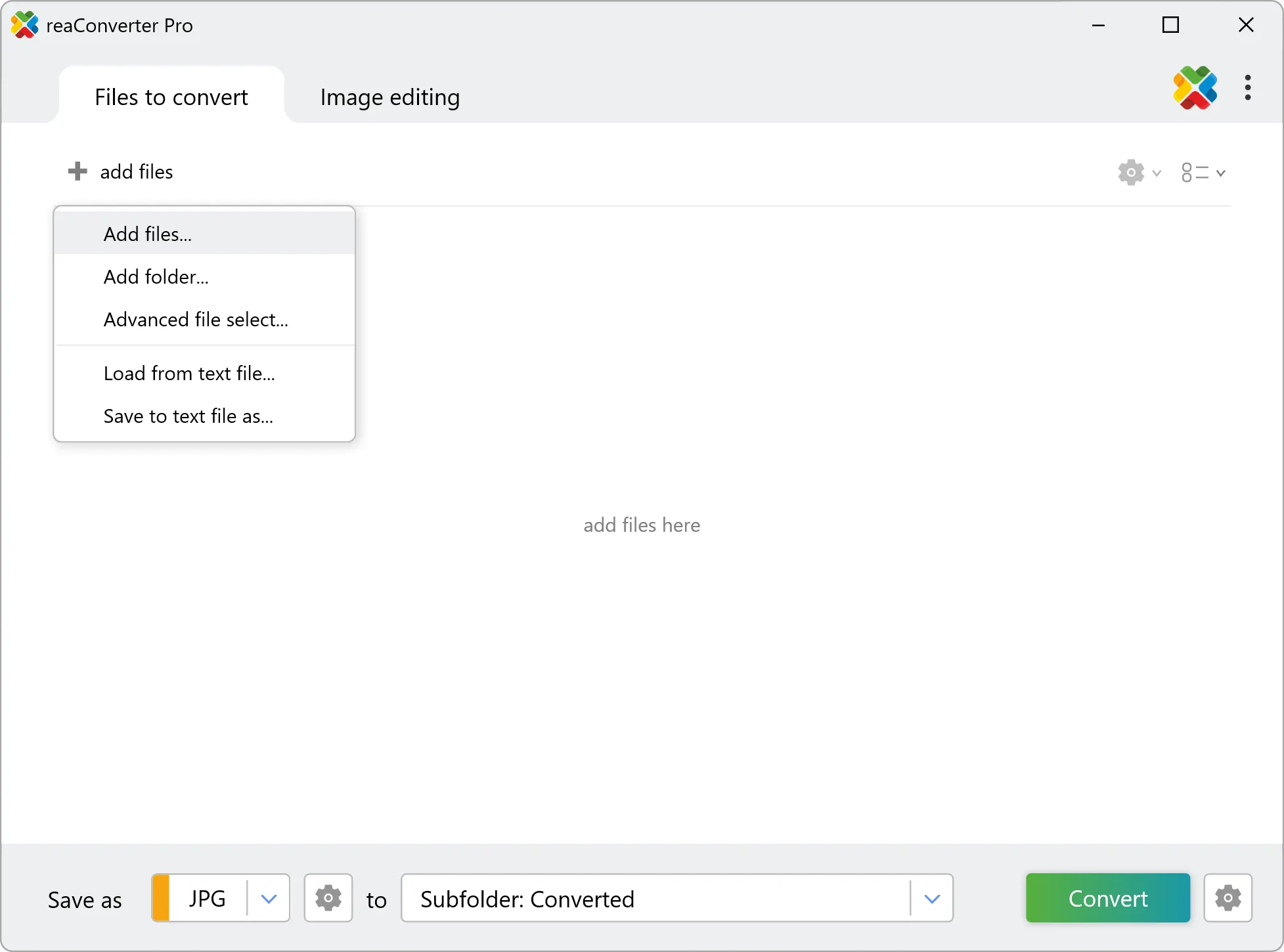
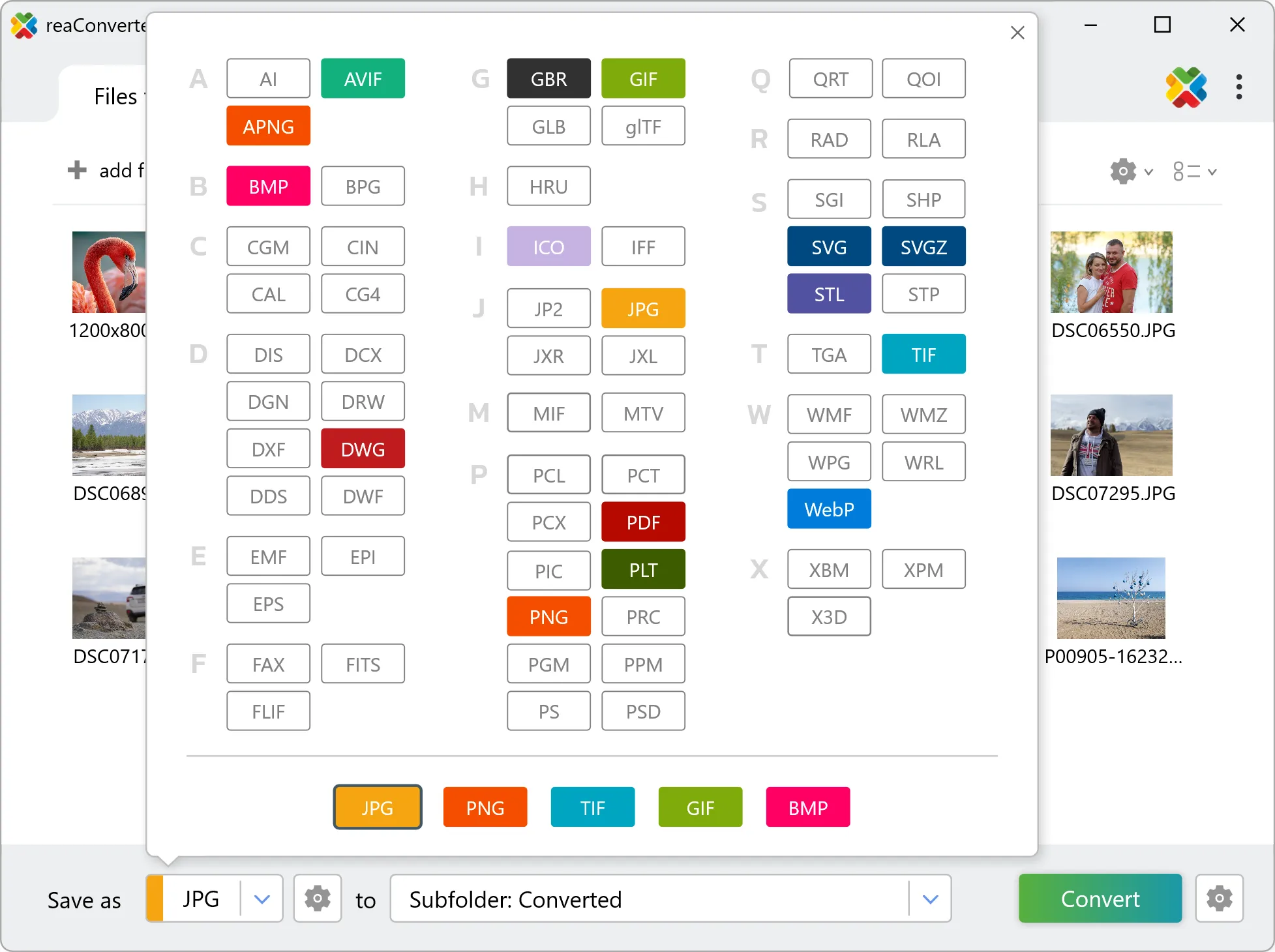
3. Select AI as output format
Choose AI and set the tracing mode before running the batch. The same settings apply to every file, so one pass can digitise a whole folder of scans.
4. Start PEF to AI conversion
Click Convert to start the batch. reaConverter processes files quickly and shows you the status of each one.
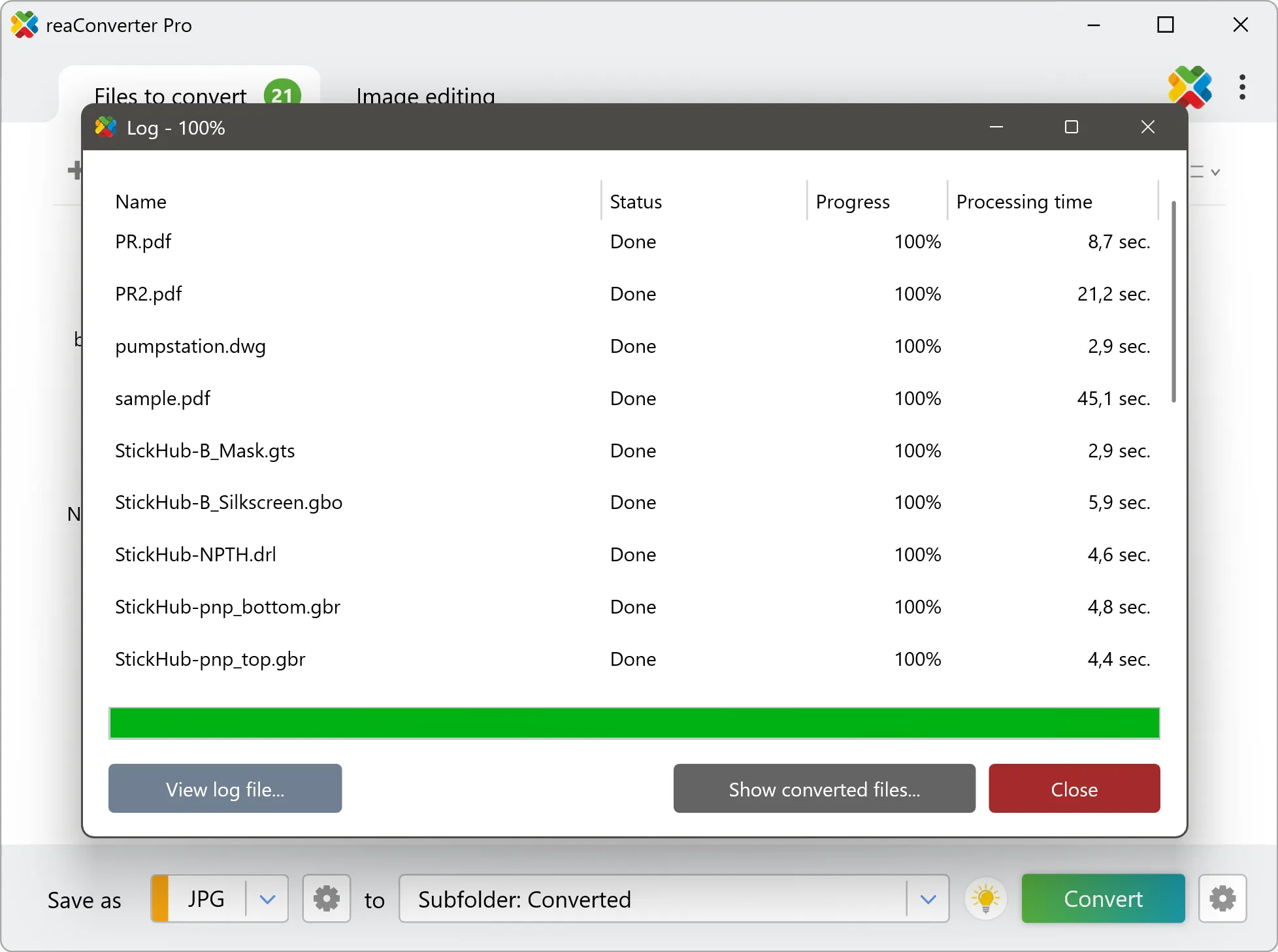
Once done, reaConverter shows a summary. Click 'Show converted files' to jump straight to your AI output.